
Iran protests: Telegram under fire as Tehran clamps down
Iran protests: Telegram under fire as Tehran clamps down

The authorities in Iran blocked access to the messaging app Telegram over the weekend, as anti-government protests spread across the country. The BBC's Leyla Khodabakhshi looks at the role the app has played.
The demonstrations started last Thursday in Mashhad, historically a bastion of religious conservatism, and have now reached more than 55 cities and towns.
Telegram - which has an estimated 40 million users in Iran, equivalent to almost half the population - is believed to have been the main platform people used to obtain and share information about the protests.
Many Iranians use private Telegram groups to keep in touch with family and friends.
More importantly, they subscribe to public channels to get the news that is not available on state media.
According to researchers at Iran's Supreme Council of Cyberspace, an average Telegram user in Iran subscribes to more than 18 public groups with more than 5,000 members.
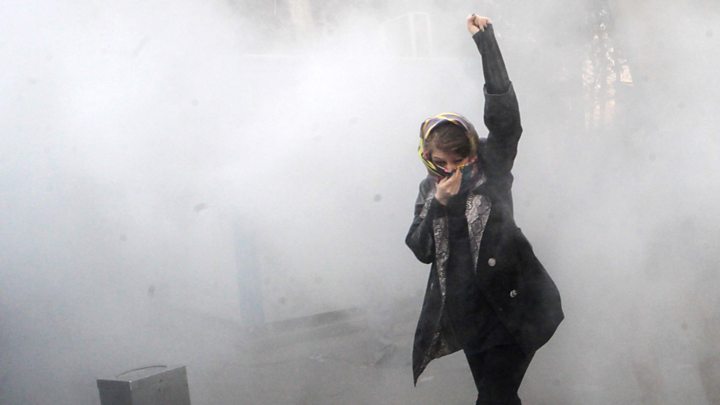
It was not surprising, then, that on the fourth day of the protests, the Iranian authorities "temporarily" blocked Telegram, as well as the popular social media platform Instagram.
On Wednesday, Communications Minister Mohammad-Javad Azari Jahromi warned that the ban could become permanent if Telegram refused to suspend "terrorist channels".
Telegram was one of the only social platforms not to have been blocked in Iran in recent years.
In his re-election campaign last year, President Hassan Rouhani declared that he had been responsible for ensuring that it continued to be possible to access the app, as well as Instagram and WhatsApp, during his first term in office.
And only one week before the current protests began, Mr Rouhani insisted that his communications minister would "not press the button that blocks social media".
On Saturday, Mr Jahromi sent a message via Twitter to Pavel Durov, the CEO of Telegram, asking the company to stop a channel "encouraging hateful conduct, use of Molotov cocktails, armed uprising and social unrest".


Comments
Post a Comment